120+ Edward Hopper: Classic American Realist Paintings
120+ Edward Hopper: Classic American Realist Paintings
 Edit
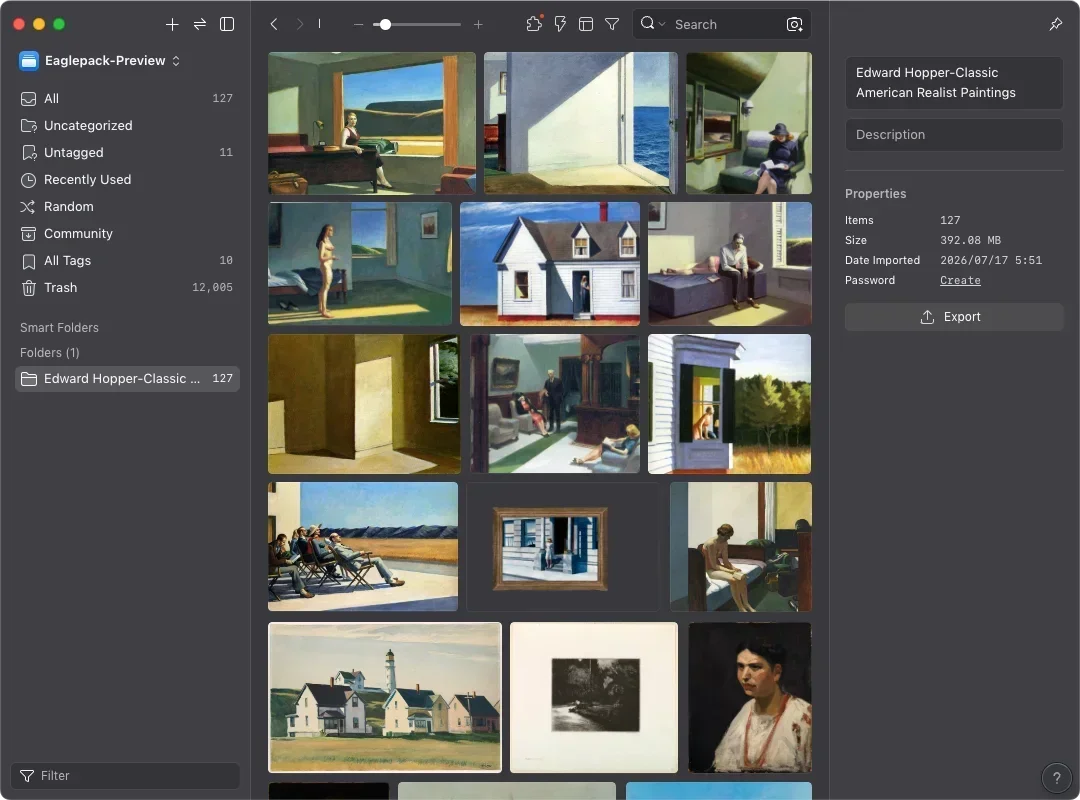
EditA curated collection of 120+ Edward Hopper paintings including Nighthawks and Morning Sun, sourced from Wikimedia, Smithsonian, and other public archives. Ideal for color palette, composition, and lighting reference.

Edward Hopper (1882–1967) is one of the most iconic American Realist painters, renowned for capturing the silence and solitude of modern urban life. This collection includes over 120 of Hopper's paintings — featuring classics such as Nighthawks, Morning Sun, Automat, and Gas — sourced from WikiArt, Wikimedia Commons, the Smithsonian, and the Cleveland Museum of Art. Available in JPG and PNG formats, for inspiration and reference use.
Hopper's work is defined by bold, flat color planes, dramatic use of artificial light, and an uncanny sense of emptiness within occupied spaces — a visual language that remains one of the most influential in 20th-century American art.
About Edward Hopper
Edward Hopper was born in 1882 in Nyack, New York, and trained at the New York School of Art under Robert Henri, a leading figure of the Ashcan School. Between 1906 and 1910, Hopper made three trips to Paris, absorbing Impressionist approaches to light, though he ultimately developed a restrained, architecturally precise compositional style of his own.
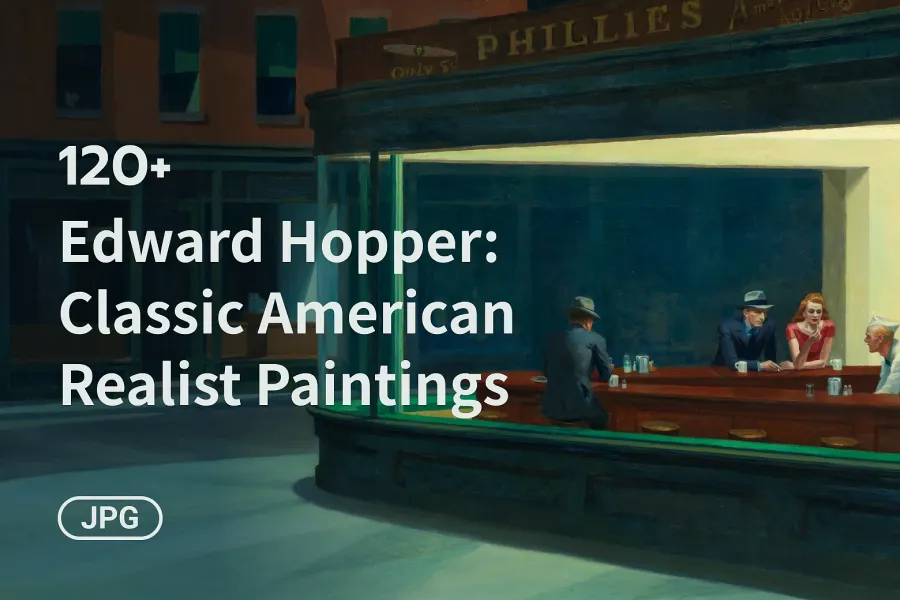
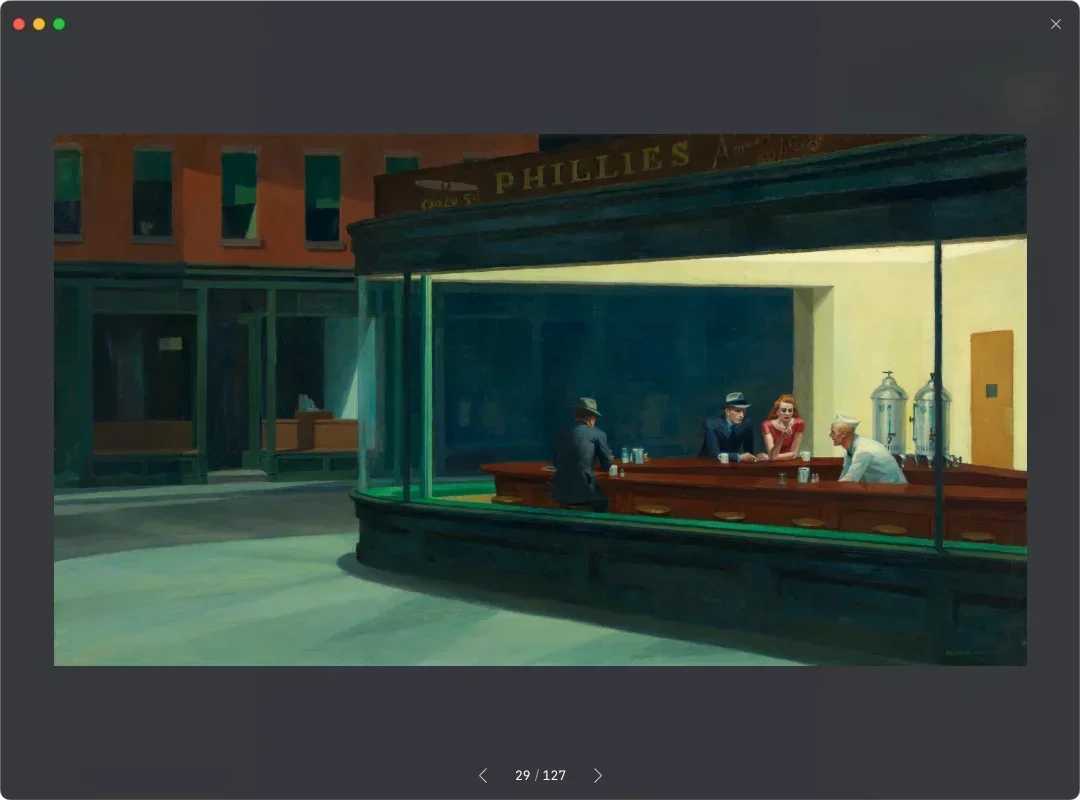
Hopper spent his early career working as a commercial illustrator, and it wasn't until 1924 — at age 42 — that his watercolors gained recognition in the art world. His most celebrated painting, Nighthawks (1942), depicts a handful of late-night patrons in a brightly lit diner, the cold artificial glow contrasting sharply with the dark, empty street outside. It has since become the defining image of American urban solitude.
Though Hopper's total output was relatively modest, nearly every painting has become a widely referenced visual symbol. His signature traits — large geometric color fields, precisely angled light, deliberate use of negative space, and figures who appear present yet emotionally disconnected — have influenced filmmakers including Alfred Hitchcock and Wim Wenders, both of whom drew on Hopper's compositions for their set designs. He passed away in New York in 1967, leaving a body of work that continues to shape photography, cinema, graphic design, and contemporary illustration.
What's Included
This collection spans Hopper's full creative arc, from early Paris studies to his late-career minimalist compositions. Works are organized into the following thematic groups:
Iconic Masterpieces
- Nighthawks (1942) — a late-night diner scene framed by a sweeping glass window, juxtaposing cold artificial light against the pitch-dark street; one of the most reproduced images in American visual culture
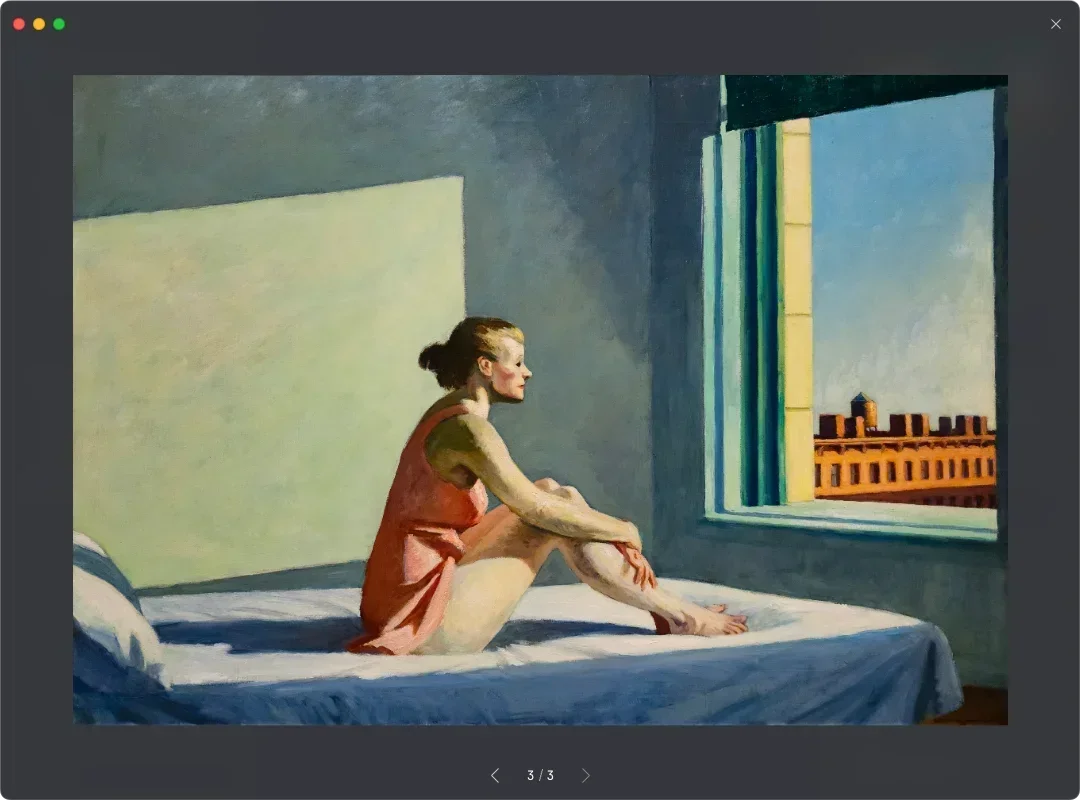
- Morning Sun (c.1952) — a solitary woman sitting on a bed facing the window, sunlight entering as a geometric block of color; Hopper's definitive study of natural light and the human figure
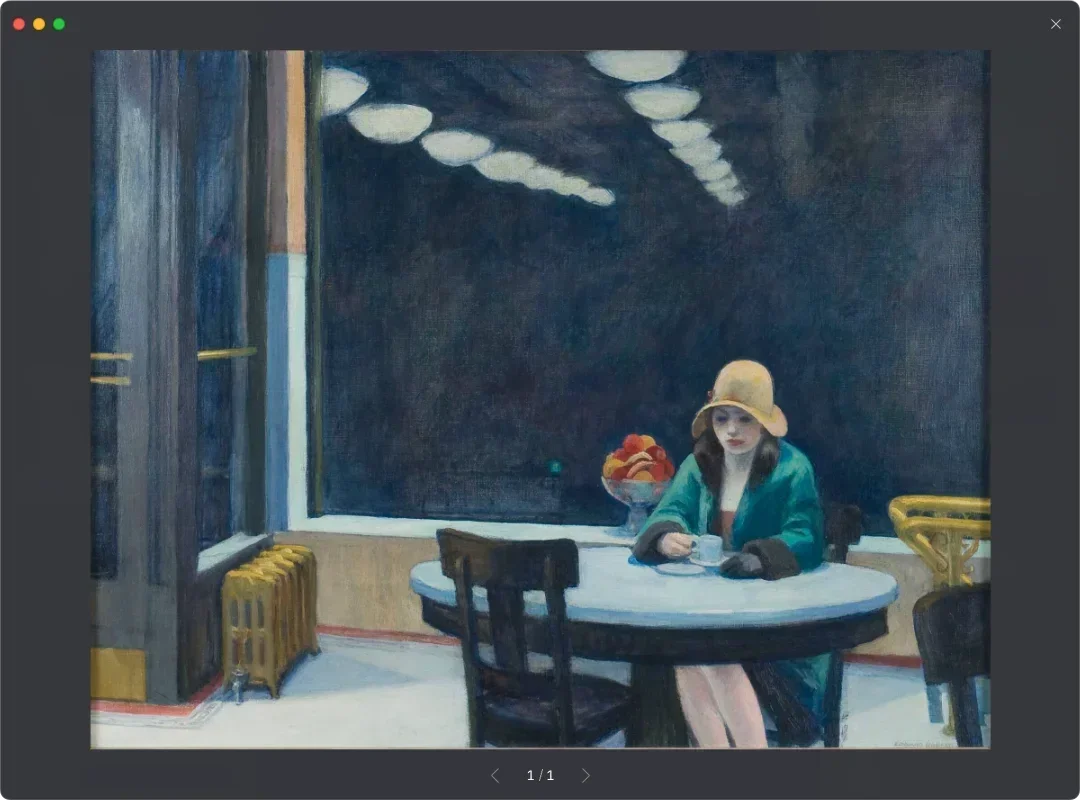
- Automat (1927) — a woman alone in a cafeteria beneath harsh fluorescent light, the black void of the window behind her; artificial light as emotional language
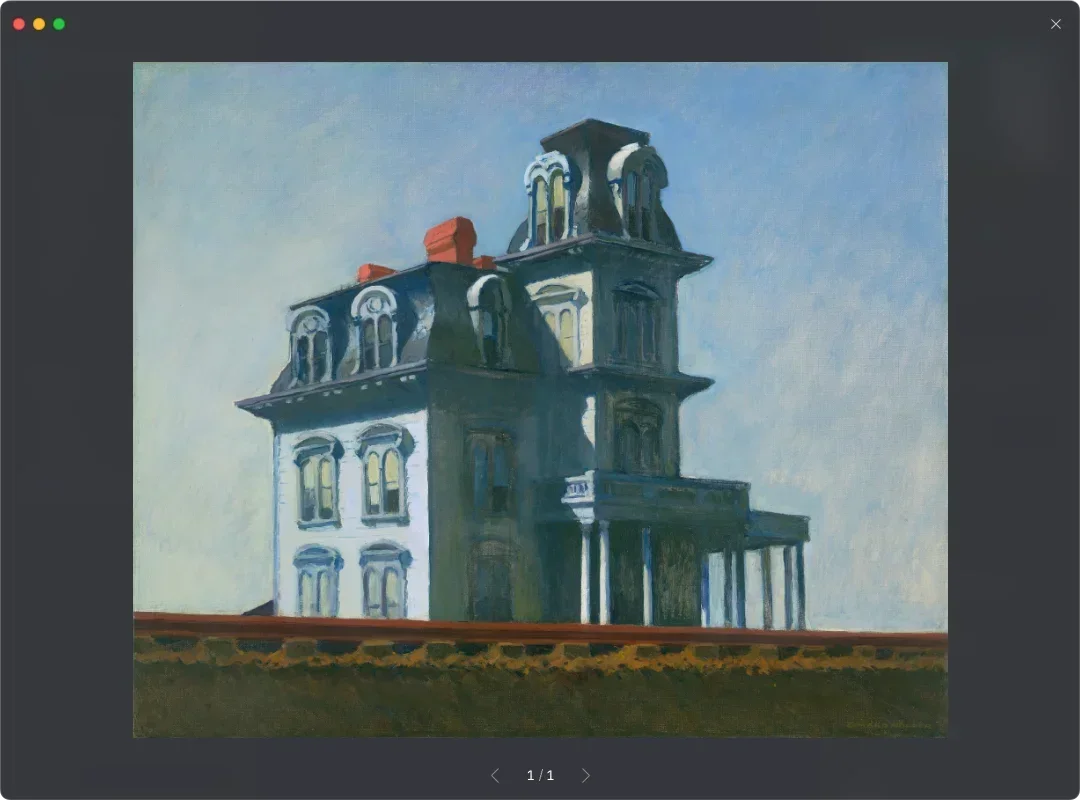
- House by the Railroad (1925) — an isolated Victorian house beside the tracks, the painting that directly inspired the Bates Motel in Hitchcock's Psycho
Interiors — Light, Space, and the Human Figure
Hopper's most recognizable subject. This collection includes Room in New York (1932), Office at Night (1940), Hotel Lobby (1943), and New York Movie (1939) — an usherette lost in thought at the edge of a theater. Tracing from Eleven A.M. (1926) to Sun in an Empty Room (1963) — where the figure has vanished entirely and only light remains — you can follow Hopper's gradual reduction of composition to its essence: light and space.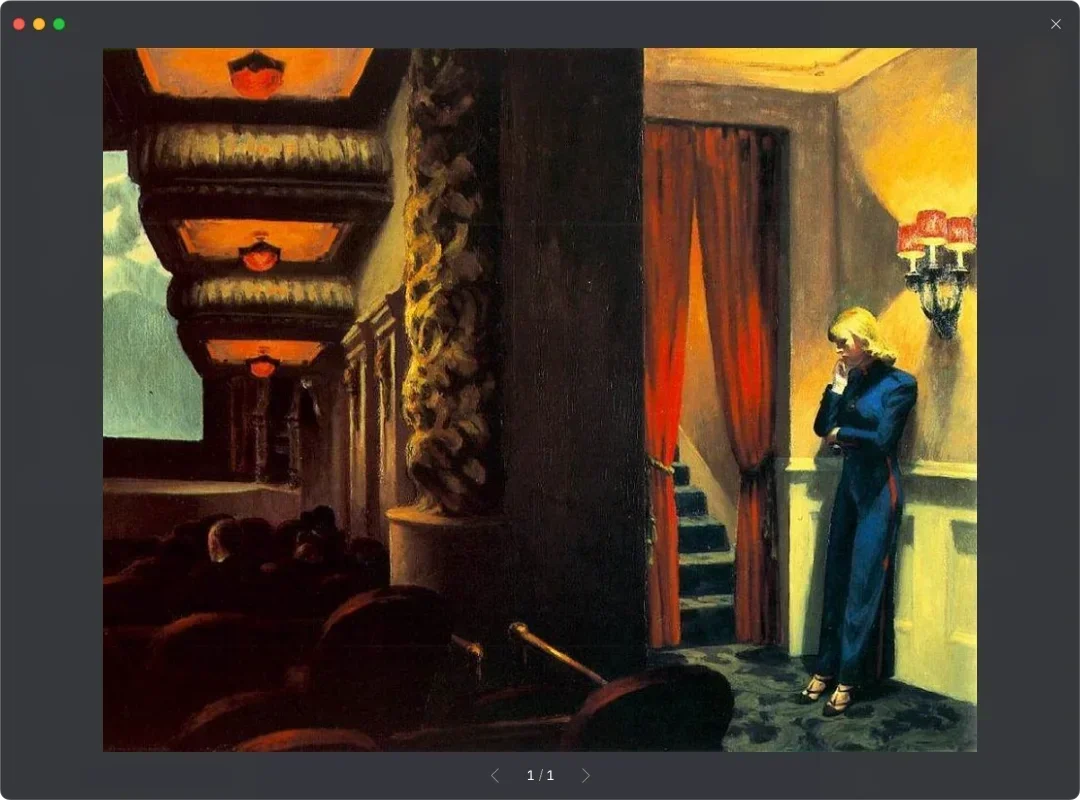
Urban Architecture and Streetscapes
Early Sunday Morning (1930) captures the facade of a deserted storefront row in horizontal composition; Night Windows (1928) offers a voyeuristic glimpse into an apartment from across the street. Also included are Manhattan Bridge Loop (1928), Blackwell's Island (1928), and The City (1927).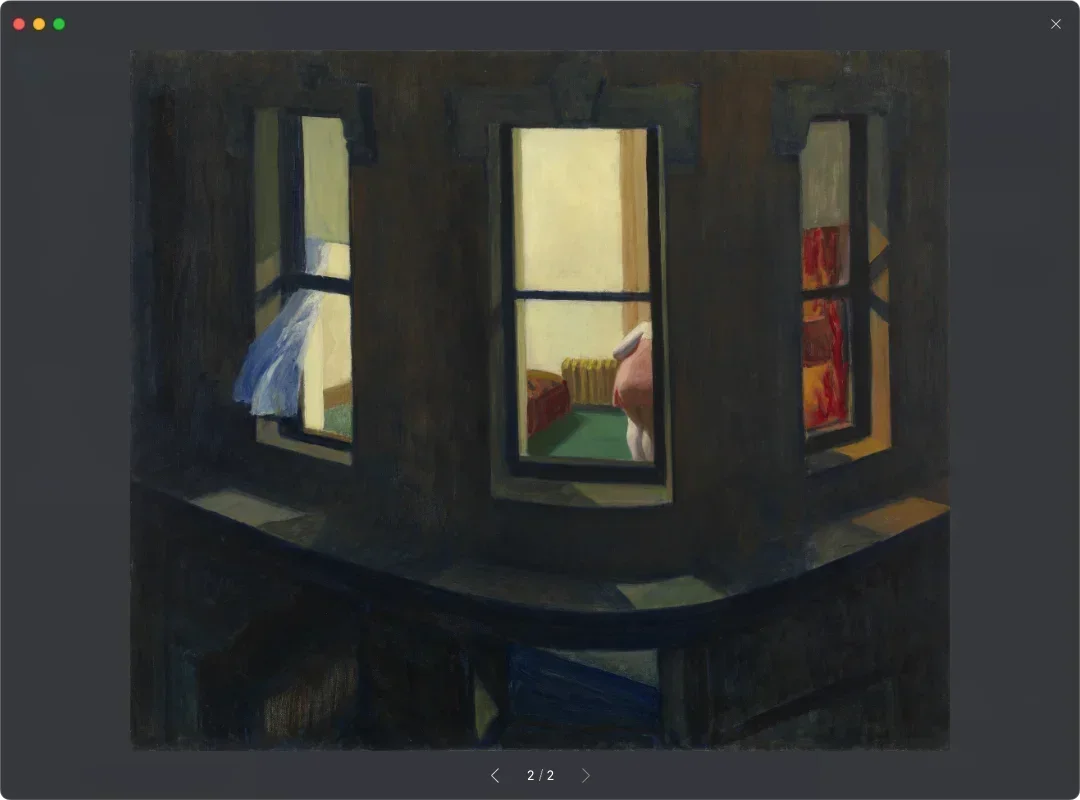
Coastlines and Landscapes
Hopper spent his summers on Cape Cod for decades. This collection includes Cape Cod Evening (1939), Cape Cod Morning (1950), and Ground Swell (1939) — young sailors eyeing a channel buoy. Rooms by the Sea (1951), with its doorway opening directly onto the ocean, stands as Hopper's most surreal spatial composition. Lighthouse works such as Lighthouse Hill (1927) and Light at Two Lights are also included.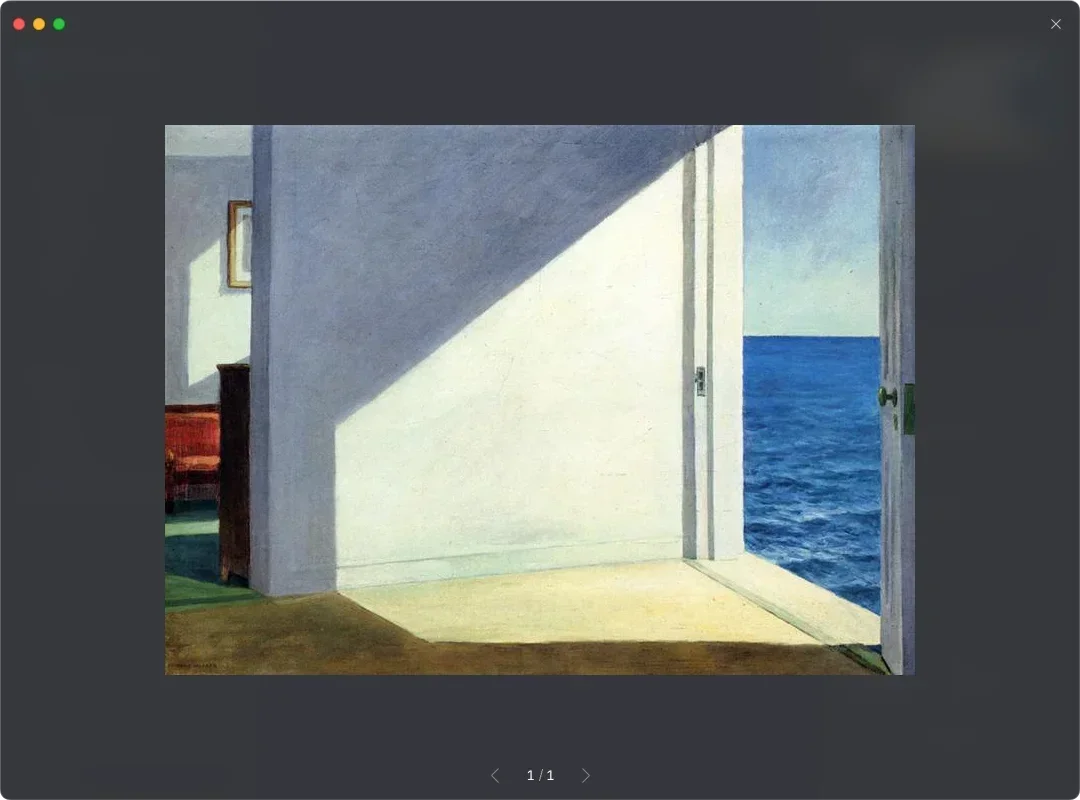
Etchings and Drawings
Approximately 12 prints and sketches, including Evening Wind (1921) and Night Shadows — etchings that showcase Hopper's mastery of line and tonal contrast in printmaking. Two self-portraits (1903 and c.1925–1930) document the artist's appearance from youth to middle age.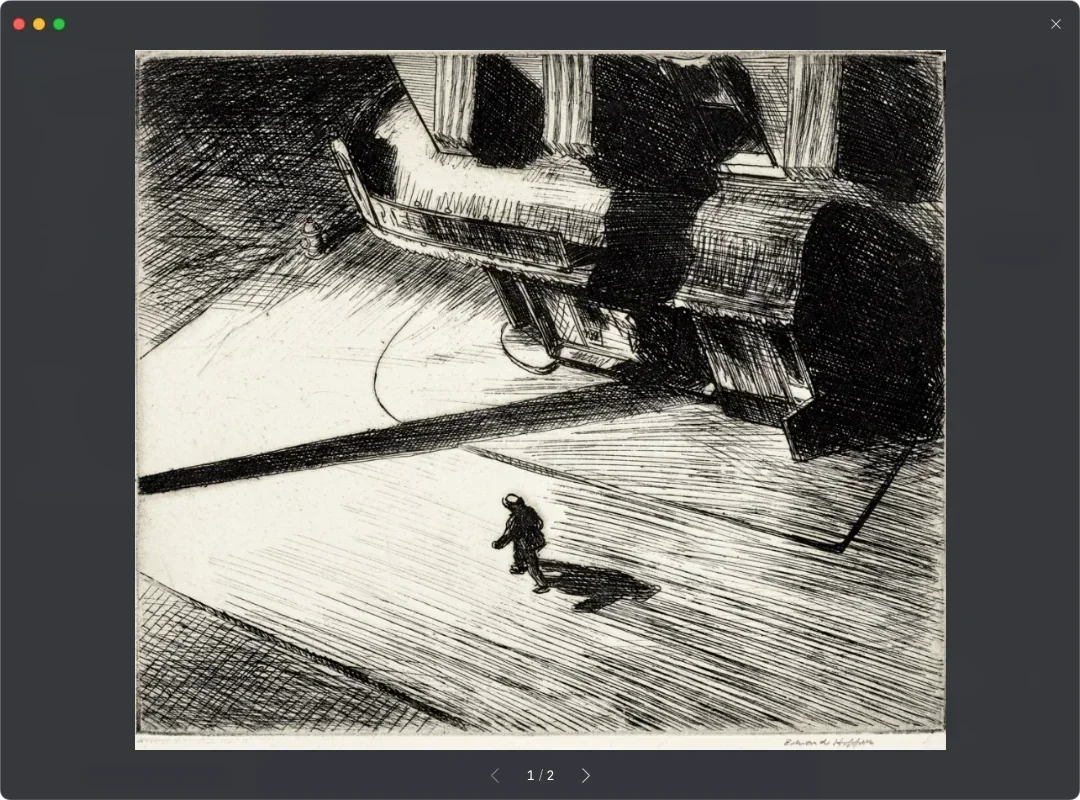
Early Works and Commercial Illustrations
Soir Bleu (1914) is a rare large-scale group scene from Hopper's Paris period, strikingly different in tone from his later work. Sailing (1911) and Tramp Steamer (c.1908) reveal early explorations of light on water. Commercial illustrations such as the Smash The Hun magazine cover are also included, offering a view of Hopper's work across commercial and fine art contexts.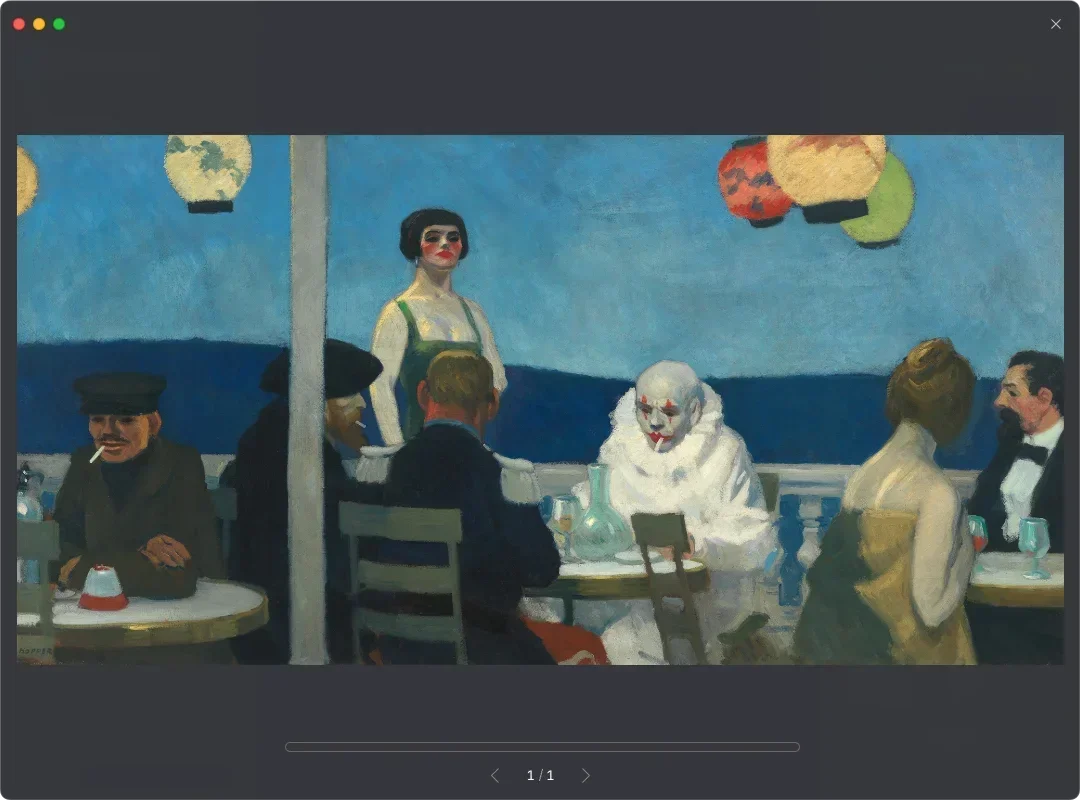
Key Features
- Compositions built on large, flat color planes in restrained palettes of muted yellow, cool blue, and deep green — useful as a source for brand color extraction or Mood Board palettes
- Dramatic use of artificial light — fluorescent lamps, street lights, window glow creating sharp light-dark contrasts — valuable as reference for photographic lighting setups and scene design
- Geometric framing of architecture and interiors with cinematic horizontal perspective, ideal for studying visual hierarchy and negative space in layout design
- Figures depicted in still, contemplative, or non-interactive states — a "narrative withholding" technique directly applicable to illustration and visual storytelling
- Subject matter spanning city streets, gas stations, hotel rooms, theaters, and coastal landscapes — a visual archive for exploring "the everyday as aesthetic"
Can I Use These Commercially?
Hopper's works have entered the public domain. However, the digital image files in this collection are sourced from WikiArt, Wikimedia Commons, the Smithsonian, and the Cleveland Museum of Art, each with its own terms for digital reproductions. We recommend using this collection for design inspiration and visual research. For formal publication or commercial projects, please verify the licensing terms of each source platform individually.
Suggested Use Cases
- As color palette references for brand visual planning — Hopper's color combinations (warm artificial yellow × cool shadow tones) translate directly into Mood Board swatches
- As full-bleed atmosphere reference pages in design pitch decks, conveying keywords like solitude, urban, and vintage
- As lighting and composition study material for photography and cinematography, especially for artificial-light scene setups
- As visual mood references in interior design and spatial planning proposals
You may also like